
Anka EPE3 vs Remta DE10P Tea Machines: Footprint Analysis
A compact 34-litre unit versus a 40-litre jumbo model. We compare their physical dimensions, power density, and installation requirements to determine which fits your kitchen layout.
The Anka EPE3 is the definitive choice for tight spaces, fitting into a 420 mm width that the Remta DE10P cannot match. If your counter run exceeds 560 mm and you require higher volume, the Remta DE10P offers 40 litres of capacity. However, the Remta demands 710 mm of vertical clearance, which many standard hoods cannot accommodate. Choose the Anka for spatial efficiency and the Remta for raw capacity.
Products compared
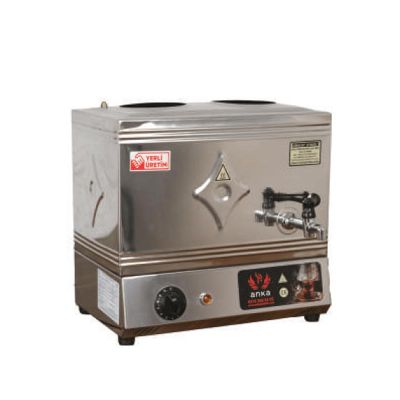
Product A
Anka EPE3 Eco Stainless Steel Tea Maker with 3 Teapots, 34 L, Electric
Large-capacity electric tea maker with a 34-liter stainless steel reservoir and three infusers. Designed for commercial use with energy efficiency and compact design.
- Power Source
- Electric
- Voltage
- 220 V
- Power
- 2500 W
- Width
- 420 mm
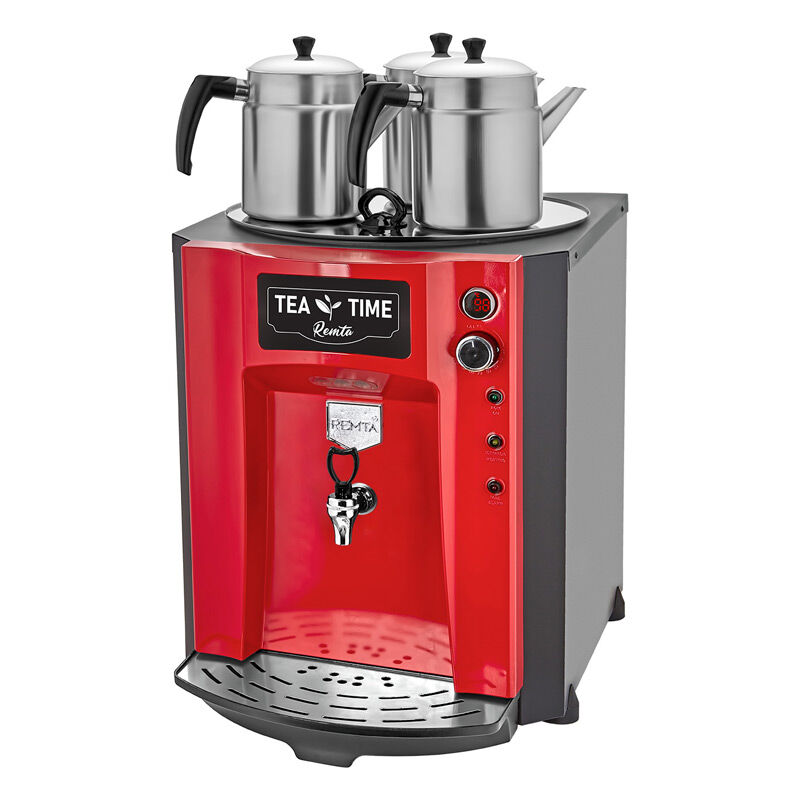
Product B
Remta DE10P Premium Jumbo Tea Maker, 40 L, Electric, Red
The Remta DE10P is a 40-liter electric tea maker with three infusers, designed for commercial use. It features insulation, LED lighting, and automatic temperature control for energy efficiency.
- Power Source
- Electric
- Voltage
- 220 V
- Power
- 3000 W
- Width
- 560 mm
On this page
- The two machines
- What actually separates them
- The space math
- Doors, drawers and service access
- Utilities and installation
- Which kitchen each one fits
- Where they differ
- Strengths and weak spots
- Which one for which kitchen?
- A cocktail bar
- A juice or smoothie counter
- A hotel minibar or room service
- Before you order
- Our call
- Questions we get asked
- Which tea machine is better for a small cafe?
- Can the Remta DE10P fit under a standard hood?
- What is the annual energy cost difference?
- Related comparisons
The two machines
| Product | Brand | Category | Key specs | |
|---|---|---|---|---|
| A | Anka EPE3 Eco Stainless Steel Tea Maker with 3 Teapots, 34 L, Electric | Anka | Tea Machines | Power Source: Electric; Voltage: 220 V; Power: 2500 W |
| B | Remta DE10P Premium Jumbo Tea Maker, 40 L, Electric, Red | Remta | Tea Machines | Power Source: Electric; Voltage: 220 V; Power: 3000 W |
What actually separates them
Commercial tea machines often prioritize capacity over spatial efficiency, but kitchen real estate is a finite resource. The Anka EPE3 and Remta DE10P represent two distinct approaches to high-volume brewing. One prioritizes a tight footprint, while the other maximizes jug volume at the expense of width and height.
Operators should verify specific installation requirements with their dealer before committing to a purchase.
The space math
The Anka EPE3 occupies a footprint of 0.18 m², calculated from its 420 mm width and 360 mm depth. This compact base allows it to fit into narrower counter runs where the Remta DE10P simply cannot go. The Remta requires a 560 mm width and 405 mm depth, resulting in a larger 0.23 m² footprint. This 140 mm width difference is often the deciding factor in cramped back-of-house layouts.
When considering volume, the Remta DE10P is significantly taller at 710 mm compared to the Anka’s 550 mm. This height difference of 160 mm creates a box volume of 0.2 m³ for the Remta versus 0.1 m³ for the Anka. The Anka’s lower profile makes it easier to integrate under standard shelving or low-hanging equipment, whereas the Remta’s height may require removing overhead obstructions.
Doors, drawers and service access
Service access and cleaning are critical for commercial uptime. The Anka EPE3 has welded 304-grade stainless steel tank, which ensures durability but may complicate internal cleaning compared to removable components. The Remta DE10P includes LED lighting and an insulated double-wall design, which aids in visual monitoring and temperature retention. Both units use an infuser system for tea brewing, requiring regular descaling and leaf removal.
The Remta DE10P is designed for countertop installation, offering flexibility in placement without fixed mounting. The Anka EPE3 also lists installation as required, suggesting it may need specific securing or plumbing connections. The Remta’s automatic float system refills water from a tank or bottle, reducing the need for constant manual top-ups. This feature is particularly useful in high-volume settings where staff cannot monitor the machine constantly.
Utilities and installation
Power consumption is a key operational cost. The Anka EPE3 has a connected load of 2.5 kW, while the Remta DE10P draws 3.0 kW. This 500 W difference means the Remta places a higher demand on your electrical circuit. When calculating estimated annual energy at 8 hours per day for 300 days, the Anka is estimated at 6,000 kWh/year, compared to 7,200 kWh/year for the Remta. Both units operate on 220V single-phase power.
Floor loading is another consideration. The Anka EPE3 weighs 11 kg, resulting in a weight per footprint of 72.8 kg/m². The Remta DE10P is slightly heavier at 13 kg, with a weight per footprint of 57.3 kg/m². The Anka’s higher density means it may require a sturdier countertop surface. Neither spec sheet specifies the required drain connection or ventilation needs, so these must be confirmed with the installer.
Which kitchen each one fits
The Anka EPE3 is ideal for cafes and restaurants with limited counter space. Its 34-litre capacity and 3 teapots are sufficient for moderate traffic. The compact design allows it to fit into narrow alcoves or shared stations. It is suitable for venues where space is at a premium, and the lower power consumption helps reduce operational costs.
The Remta DE10P is better suited for hotels and catering operations with higher volume demands. Its 40-litre capacity and 3 infusers can handle larger batches. The insulated design helps maintain temperature, reducing energy waste. However, it requires a wider counter and more vertical space. It is not suitable for kitchens with low overhead clearance or narrow service corridors.
Where they differ
| Specification | A | B | What it changes in practice |
|---|---|---|---|
| Width | 420 mm | 560 mm | The Anka fits narrow counters; the Remta requires a wider run. |
| Height | 550 mm | 710 mm | The Remta may not fit under standard hoods or shelves. |
| Capacity | 34 L | 40 L | The Remta produces more tea per cycle, suitable for higher traffic. |
| Power | 2.5 kW | 3.0 kW | The Remta draws more power, impacting electrical load and energy costs. |
Strengths and weak spots
| Strengths | Limitations | |
|---|---|---|
| A | - Compact 420 mm width fits tight spaces. - Lower power consumption (2.5 kW) reduces energy costs. |
- Skip it if you need more than 34 litres of capacity. - Welded tank may be harder to clean internally than removable components. |
| B | - Larger 40-litre capacity handles high-volume service. - Automatic float system reduces manual refilling. |
- Skip it if your counter width is less than 560 mm. - Not suitable for kitchens with low overhead clearance due to 710 mm height. |
Which one for which kitchen?
A cocktail bar
Cocktail bars often have limited back-bar space. The Anka EPE3’s compact 420 mm width allows it to fit into narrow areas without obstructing workflow. The Remta DE10P’s 560 mm width may be too wide for standard bar setups. The Anka’s lower height also makes it easier to reach and operate.
Pick: Anka EPE3 Eco Stainless Steel Tea Maker with 3 Teapots, 34 L, Electric
A juice or smoothie counter
Juice counters typically have ample counter space but may lack vertical clearance due to signage or lighting. The Remta DE10P’s 710 mm height might interfere with overhead fixtures. The Anka EPE3’s 550 mm height is safer for such environments. Both units offer sufficient capacity for moderate juice service.
Pick: Anka EPE3 Eco Stainless Steel Tea Maker with 3 Teapots, 34 L, Electric
A hotel minibar or room service
Hotel minibars or room service stations often require high capacity for bulk preparation. The Remta DE10P’s 40-litre capacity is better suited for large batches. Its automatic float system reduces the need for constant monitoring, which is ideal for staff managing multiple tasks. The Anka’s 34-litre capacity may be insufficient for large groups.
Pick: Remta DE10P Premium Jumbo Tea Maker, 40 L, Electric, Red
Before you order
- Confirm the supply phase with the dealer before ordering: Neither spec sheet states the electrical phase (single or three-phase), which is critical for installation.
- Verify the warranty terms for both units: Warranty duration and coverage are not listed in the evidence, affecting long-term cost.
- Check if a drain connection is required: The spec sheets do not specify if a drain is needed, which impacts plumbing installation.
- Assess ventilation requirements for the installation site: Neither unit lists ventilation needs, which may be necessary for heat dissipation.
- Measure the noise level if placed near guest areas: Noise levels are not provided, which is important for customer comfort in open kitchens.
Our call
The Anka EPE3 and Remta DE10P serve different kitchen needs. The Anka is the clear winner for space-constrained environments, offering a compact footprint and lower energy use. The Remta is better for high-volume operations that can accommodate its larger size and higher power draw. Operators must carefully measure their counter width and vertical clearance before choosing. The Remta’s automatic float system is a significant advantage for reducing manual labor, but its size limits its applicability. Ultimately, the choice depends on your specific spatial and capacity requirements.
Questions we get asked
Which tea machine is better for a small cafe?
The Anka EPE3 is better for small cafes due to its compact 420 mm width and lower power consumption. It fits into tighter spaces while providing sufficient capacity for moderate traffic.
Can the Remta DE10P fit under a standard hood?
The Remta DE10P is 710 mm tall, which may not fit under standard hoods. Measure your overhead clearance before ordering, as it requires more vertical space than the Anka EPE3.
What is the annual energy cost difference?
Based on 8 hours/day and 300 days/year at nameplate power, the Anka EPE3 uses 6,000 kWh/year, while the Remta DE10P uses 7,200 kWh/year. The Anka is more energy-efficient.
Related comparisons
FindGastro Editorial · Commercial kitchen equipment editors
Author profile →