
Animo ComBi-Line CB 2x5 vs Bravilor Bonamat B5 HW: Energy & Voltage
Comparing the Animo ComBi-Line CB 2x5 and Bravilor Bonamat B5 HW filter coffee machines through the lens of electrical load, physical footprint, and operational efficiency for commercial kitchens.
The Animo ComBi-Line CB 2x5 wins on energy efficiency, drawing 3,175 W on a standard 230 V circuit, while the Bravilor Bonamat B5 HW demands 5,330 W and a 400 V supply. If your site lacks three-phase power or you prioritize lower connected load, choose Animo. For high-volume durability with stainless steel construction, the Bravilor is the better fit despite the higher electrical demand.
Products compared
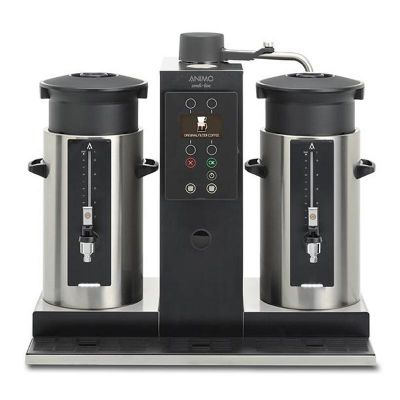
Product A
Animo ComBi-Line CB 2x5 Cylindrical Filter Coffee Machine, 10 L
This cylindrical filter coffee machine features a 10-liter capacity and 30-liter per hour output. It includes a digital interface, pre-programmable timer, and a double-walled stainless steel boiler for efficient brewing.
- Power Source
- Electric
- Voltage
- 230 V
- Power
- 3175 W
- Width
- 815 mm
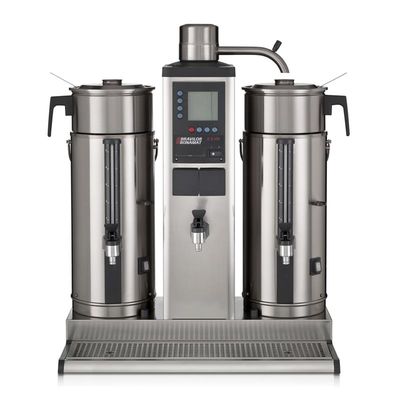
Product B
Bravilor Bonamat B5 HW Filter Coffee Machine, 2x5 L
The Bravilor Bonamat B5 HW is a high-capacity filter coffee machine with two 5-liter brew tanks, capable of producing 30 liters per hour. It features a stainless steel body, LCD control, and a built-in descaling system for reliable, long-term use.
- Power Source
- Electric
- Voltage
- 400 V
- Power
- 5330 W
- Width
- 790 mm
On this page
- The two machines
- What actually separates them
- The utility bill angle
- Heat and ventilation
- Electrical work and startup
- Who should pay for efficiency
- Where they differ
- Strengths and weak spots
- Which one for which kitchen?
- A specialty café
- A hotel breakfast service
- A roastery or tasting bar
- Before you order
- Our call
- Questions we get asked
- Can the Bravilor Bonamat B5 HW run on 230 V?
- Which machine is more energy efficient?
- Do both machines require a direct water line?
- Related comparisons
The two machines
| Product | Brand | Category | Key specs | |
|---|---|---|---|---|
| A | Animo ComBi-Line CB 2x5 Cylindrical Filter Coffee Machine, 10 L | Animo | Filter Coffee Machines | Power Source: Electric; Voltage: 230 V; Power: 3175 W |
| B | Bravilor Bonamat B5 HW Filter Coffee Machine, 2x5 L | Bravilor Bonamat | Filter Coffee Machines | Power Source: Electric; Voltage: 400 V; Power: 5330 W |
What actually separates them
Filter coffee machines in high-volume settings are often underestimated in their electrical impact. While they do not generate steam heat like espresso machines, their continuous heating elements and large thermal masses create significant connected loads. Understanding the difference between nameplate power and actual duty cycle is critical for kitchen planning and utility budgeting.
The utility bill angle
The Animo ComBi-Line CB 2x5 lists a connected load of 3,175 W, whereas the Bravilor Bonamat B5 HW requires 5,330 W. This 2,155 W difference is substantial for any commercial kitchen circuit. The Animo machine operates on a single 230 V supply, simplifying installation, while the Bravilor demands a 400 V three-phase connection.
Estimated annual energy consumption assumes 8 hours of operation per day, 300 days a year, at full nameplate power. Under this assumption, the Animo consumes 7,620 kWh/year, while the Bravilor draws 12,792 kWh/year. Note that actual duty cycles are lower than 100%, but the proportional difference remains significant for long-term utility costs.
Heat and ventilation
Higher connected load directly translates to more ambient heat rejection. The Bravilor Bonamat B5 HW, with its 5,330 W power rating, will contribute more waste heat to the kitchen environment than the Animo unit. This can increase the load on existing ventilation systems or air conditioning, particularly in compact or poorly ventilated prep areas.
The Animo ComBi-Line CB 2x5 has double-walled stainless steel boiler for heat insulation, which helps contain thermal energy within the brewing system. This design choice not only improves energy efficiency but also reduces the surface temperature of the machine, enhancing operator safety and lowering the ambient heat gain in the workspace.
Electrical work and startup
The Animo machine runs on 230 V, which is standard for most single-phase commercial circuits. The Bravilor Bonamat B5 HW requires 400 V, meaning it likely needs a dedicated three-phase circuit. Installing this may require an electrician to upgrade the site’s electrical infrastructure.
Both machines are designed for direct water line connections, eliminating the need for manual water tank refilling. However, the electrical requirements differ significantly. Before ordering the Bravilor, confirm the available phase and breaker capacity with a qualified electrician. The Animo’s 230 V requirement is more universally compatible with existing kitchen infrastructure.
Who should pay for efficiency
Energy efficiency should be weighed against volume requirements. Both machines produce 30 liters per hour, but the Animo achieves this with a 10-liter cylindrical container and a 3,175 W load. The Bravilor uses two 5-liter brew tanks and a 5,330 W load. The Animo’s design suggests a more efficient thermal transfer per watt consumed.
For high-volume operations, the cost of downtime often outweighs energy savings. The Bravilor’s stainless steel body and built-in descaling system offer solid maintenance features. However, if energy costs are a primary concern or electrical capacity is limited, the Animo’s lower power draw and standard voltage make it the more practical choice for budget-conscious operators.
Where they differ
| Specification | A | B | What it changes in practice |
|---|---|---|---|
| Connected Load | 3,175 W | 5,330 W | The Bravilor draws 67.87% more power, impacting utility bills and circuit capacity. |
| Voltage | 230 V | 400 V | Animo fits standard single-phase circuits; Bravilor requires three-phase, potentially needing an electrician. |
| Footprint | 0.4 m² | 0.5 m² | The Bravilor is wider (790 mm vs 815 mm width but deeper 570 mm vs 470 mm), requiring more counter space. |
| Height | 700 mm | 799 mm | The Bravilor is nearly 10 cm taller, which may affect clearance under shelves or hoods. |
Strengths and weak spots
| Strengths | Limitations | |
|---|---|---|
| A | - Lower connected load (3,175 W) reduces utility costs and circuit strain. - Standard 230 V voltage simplifies installation without requiring three-phase power. |
- Aluminum front casing may be less durable than stainless steel in high-impact environments. - Skip it if you require a fully stainless steel body for hygiene-critical zones. |
| B | - Stainless steel 304 body offers superior durability and hygiene in heavy-use settings. - Built-in descaling system and separate hot water outlet add operational versatility. |
- High connected load (5,330 W) and 400 V requirement limit installation flexibility. - Skip it if your kitchen lacks a dedicated 400 V three-phase circuit. |
Which one for which kitchen?
A specialty café
Specialty cafés often prioritize equipment aesthetics and ease of use over raw volume. The Animo’s touch interface and pre-infusion features offer precise control, while its lower power draw fits well in smaller spaces. The Bravilor’s industrial build may be overkill for a boutique setting, and its height could be an issue in compact layouts.
Pick: Animo ComBi-Line CB 2x5 Cylindrical Filter Coffee Machine, 10 L
A hotel breakfast service
Hotel breakfasts demand high volume and reliability. Both machines produce 30 L/h, but the Bravilor’s stainless steel construction and built-in descaling system are ideal for heavy, continuous use. The Animo’s lower power draw is less critical here than the Bravilor’s durability and maintenance features, which reduce downtime during peak service.
Pick: Bravilor Bonamat B5 HW Filter Coffee Machine, 2x5 L
A roastery or tasting bar
Roasteries often have limited electrical capacity and value energy efficiency. The Animo’s 230 V supply and lower connected load make it easier to integrate into existing infrastructure. Its cylindrical design and pulse brewing technology also offer consistent quality for small batches, aligning with the precision needs of a tasting environment.
Pick: Animo ComBi-Line CB 2x5 Cylindrical Filter Coffee Machine, 10 L
Before you order
- Confirm the supply phase with the dealer before ordering; neither spec sheet states it: The Bravilor requires 400 V, but the phase (single or three) is not specified, which is critical for installation.
- Verify warranty terms and duration for both machines: Warranty coverage affects long-term ownership costs and is missing from the provided evidence.
- Check if a drain connection is required for the Bravilor’s descaling system: Built-in descaling systems often require a drain, which impacts kitchen plumbing layout.
- Assess ambient heat impact in your specific kitchen layout: The Bravilor’s higher power output will generate more waste heat, potentially affecting cooling requirements.
- Confirm noise levels if the machine is near customer seating areas: Noise data is missing, and commercial brewers can be loud during brewing cycles.
Our call
The Animo ComBi-Line CB 2x5 is the pragmatic choice for operators constrained by electrical capacity or seeking lower energy consumption. Its 230 V supply and 3,175 W load make it easier to install and run. The Bravilor Bonamat B5 HW is a solid, industrial-grade option for high-volume settings where stainless steel durability and built-in maintenance features justify the higher 400 V power demand. Choose Animo for efficiency and ease; choose Bravilor for heavy-duty resilience.
Questions we get asked
Can the Bravilor Bonamat B5 HW run on 230 V?
No, the Bravilor Bonamat B5 HW requires a 400 V supply. Attempting to run it on 230 V will likely damage the machine or prevent it from operating.
Which machine is more energy efficient?
The Animo ComBi-Line CB 2x5 is more energy efficient, with a connected load of 3,175 W compared to the Bravilor’s 5,330 W.
Do both machines require a direct water line?
Yes, both the Animo and Bravilor models are designed for direct water line connections, eliminating the need for manual water tank refilling.
Related comparisons
FindGastro Editorial · Commercial kitchen equipment editors
Author profile →